If you are trying to choose between a single-family home and a townhome in Contra Costa County, you are not alone. Many buyers are weighing the same question as prices, inventory, and lifestyle needs shift across the East Bay. The good news is that the right choice usually becomes clearer once you compare upkeep, costs, commute, and flexibility side by side. Let’s dive in.
Contra Costa buyers have more to weigh now
Contra Costa County’s mid-year economic update shows a FY-2026 median price of $779,750, with home sales down 0.3% year over year, active listings up 13.2%, and 2.4 months of supply. That combination suggests the market is moving toward a buyer’s market as prices and sales ease while inventory rises.
For you, that can create a little more room to compare options instead of rushing into the first home that seems close enough. It also makes it even more important to look beyond the list price and think about how each home type fits your daily life and long-term plans.
What a townhome means in California
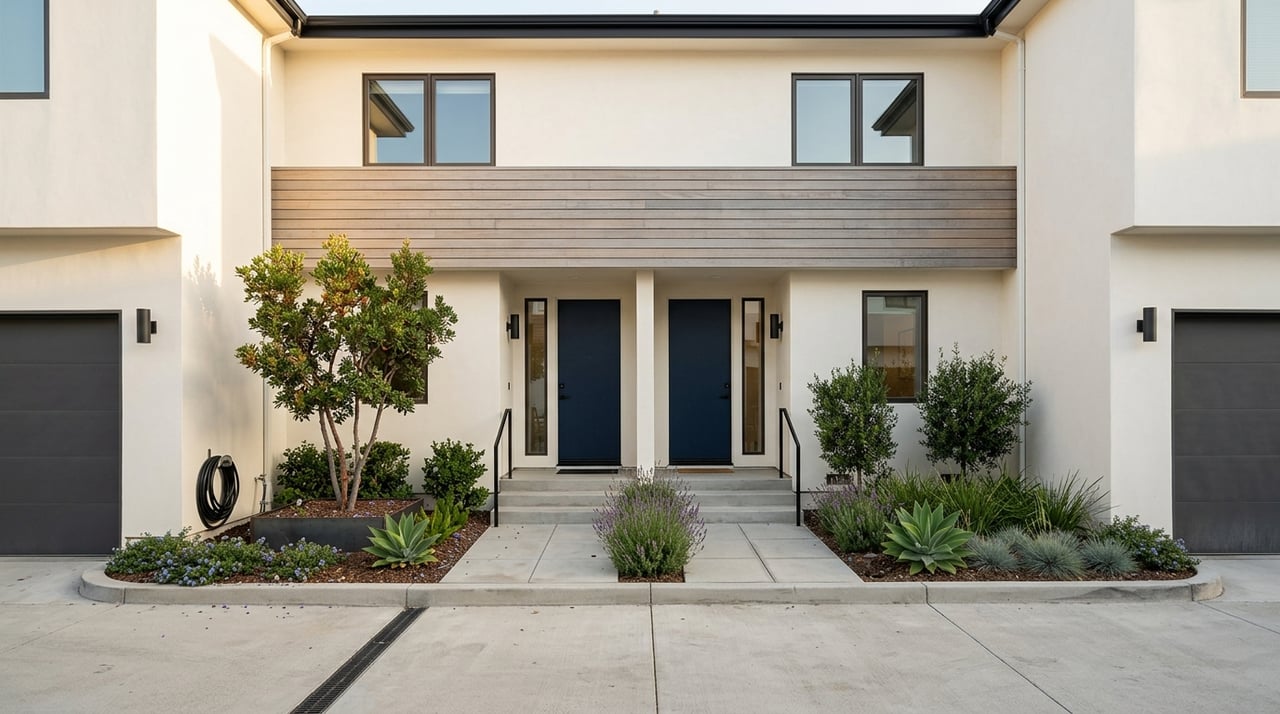
One of the biggest points of confusion is that a townhome is an architectural style, not a legal ownership category in California. The California Department of Real Estate says townhomes usually refer to multiple residences in one building structure, often with two or more stories, where the homes are side by side rather than stacked above and below each other.
That matters because two homes that both look like townhomes can come with different ownership structures and different rules. The legal form may be a condominium or a planned development, so the details of ownership, maintenance, and HOA authority can vary by community.
Single-family homes are not always HOA-free
Many buyers assume a detached house automatically means no HOA. In California, that is not always true.
The Department of Real Estate notes that many single-family detached subdivisions are planned developments when they include common areas, private streets, recreation space, or other shared improvements. In those communities, an HOA is created to own and maintain those shared features.
So when you compare single-family and townhome living in Contra Costa, it helps to avoid broad assumptions. A detached home may offer more privacy, but it can still come with dues, rules, and shared obligations depending on the subdivision.
Maintenance is one of the biggest trade-offs
For many buyers, maintenance is where the difference becomes real. If you are deciding between convenience and control, this is often the section that makes your next step obvious.
California Civil Code says an association is responsible for repairing, replacing, and maintaining the common area, while the owner is responsible for the separate interest. For exclusive-use common area, the owner generally maintains it, while the association repairs and replaces it unless the governing documents say otherwise.
In practical terms, many townhome owners have less exterior upkeep to manage on their own than owners of detached homes. That can be appealing if you want a more lock-and-leave lifestyle or if you simply do not want every weekend to turn into a home maintenance project.
A detached home, on the other hand, often gives you more direct control over your yard, storage, and future changes. For buyers who want more independence and less day-to-day shared decision-making, that can be a major advantage.
HOA dues are part of the true monthly cost
If you are looking at townhomes, HOA dues should be treated as part of your true carrying cost. They are not just an extra line item to glance at after you fall in love with the floor plan.
The Department of Real Estate’s reserve-study guidance explains that associations must plan for major long-term items like roofs and pavement. State law also requires annual budget reports and reserve funding plans, which can reveal future increases in dues or the potential for special assessments.
That means a lower purchase price does not always equal a lower total cost of ownership. Before you decide a townhome is the budget-friendly option, it is worth reviewing not just the dues amount, but also the HOA’s overall financial health.
Read the rules before you buy
The governing documents in an HOA community can shape your day-to-day experience more than the home style itself. Buyers should read the CC&Rs, bylaws, and rules carefully before moving forward.
California law limits some HOA restrictions, but governing documents can still affect things like rentals, pets, and EV charging. In other words, your future flexibility depends on the specific community, not just whether the property is called a townhome or a single-family home.
This is especially important if you are planning ahead. If you may want to rent the property later, keep a pet, or install charging equipment, those details should be part of your decision early on.
Commute can matter as much as square footage
In Contra Costa County, the home that works best on paper is not always the one that works best for your week. If your schedule includes regular trips to Oakland, Berkeley, Hayward, San Francisco, or other parts of the East Bay, commute access can carry just as much weight as lot size.
BART serves five counties and 50 stations, including several in Contra Costa County such as Antioch, Pittsburg Center, Pittsburg/Bay Point, North Concord/Martinez, Concord, Pleasant Hill/Contra Costa Centre, Walnut Creek, Lafayette, and Orinda. Contra Costa County’s transportation information also highlights the Treat Boulevard and I-680 corridor near the Contra Costa Centre and Pleasant Hill BART area, where BART, buses, Highway 680, and the Iron Horse Trail converge.
That network is one reason attached communities near transit nodes can appeal to busy professionals and first-time buyers. BART’s regional report says that for several morning peak Bay Area trip pairs, typical BART travel times are narrower than typical vehicle travel times and are often lower at the low end of the driving range.
For you, that means a townhome in a transit-oriented location may deliver value in a way that does not show up in the bedroom count. A detached home farther from rail or freeway access may offer more space, but the trade-off could be more time and unpredictability in your daily routine.
Resale and long-term flexibility
Detached homes generally offer more autonomy, and the Department of Real Estate notes that they are considered more marketable than attached homes because of consumer preference and a larger pool of buyers. While neighborhood, price, and condition still shape resale results, that point matters if you are thinking several years ahead.
A single-family home may give you more flexibility if your household needs change over time. You may value the ability to use outdoor space differently, add storage, or make future modifications depending on local rules and property specifics.
A townhome can still be a strong long-term fit, especially if location and easier upkeep are your top priorities. But if future adaptability ranks high on your list, a detached home may give you more room to grow.
Which home type fits your lifestyle?
There is no universal winner in Contra Costa County. The better option is the one that lines up with how you live now and how you expect your needs to change over the next several years.
A single-family home may fit best if you want:
- More privacy
- More direct control over yard space
- More storage potential
- More freedom for future changes
- Less shared decision-making day to day
A townhome may fit best if you want:
- Less exterior upkeep
- A more lock-and-leave lifestyle
- Access to transit-oriented East Bay locations
- A lower-maintenance routine
- A community structure that handles some shared responsibilities
Questions to ask yourself before deciding
- How important is commute time compared with square footage?
- Are HOA dues comfortable in your monthly budget?
- Have you reviewed the HOA budget, reserves, and rules?
- Do you want more control over outdoor space and future changes?
- How likely is it that your household needs will change in the next five years?
The real decision in Contra Costa
In this market, the choice is rarely just single-family versus townhome. More often, it is a three-way balance among commute, HOA health, and the amount of space and flexibility you want over time.
That is why the best next step is not guessing from listing photos. It is comparing real properties with the full picture in mind, including dues, documents, maintenance responsibility, and how each location supports your daily routine.
If you want clear, honest guidance as you compare home types in Contra Costa County, Cj Salazar Real Estate is here to help you weigh the trade-offs and move forward with confidence.
FAQs
What is the difference between a townhome and a single-family home in Contra Costa County?
- In California, a townhome is usually an architectural style with side-by-side residences in one building structure, while a single-family home is physically detached. Ownership rules, HOA obligations, and maintenance responsibilities can vary for both depending on the legal structure and subdivision.
Do townhomes in Contra Costa County always have HOA dues?
- Townhome communities commonly have HOA dues because associations often maintain common areas and shared improvements. Those dues should be treated as part of your true monthly housing cost.
Can a single-family home in Contra Costa County have an HOA?
- Yes. Some detached homes are located in planned developments with common areas, private streets, or shared amenities, and those communities may have HOA dues and rules.
Are townhomes better for commuting in Contra Costa County?
- Not always, but many attached communities are located near transit-oriented corridors and BART stations. If you commute to Oakland, Berkeley, Hayward, San Francisco, or other regional job centers, proximity to transit may be a major benefit.
What HOA documents should buyers review before buying a Contra Costa townhome?
- Buyers should carefully review the CC&Rs, bylaws, rules, annual budget reports, and reserve funding information to understand maintenance responsibilities, financial health, and any restrictions that may affect future use.
Which home type usually has better resale flexibility in Contra Costa County?
- Detached homes are generally considered more marketable because of consumer preference and a larger buyer pool, though resale still depends on the home’s location, price, and condition.