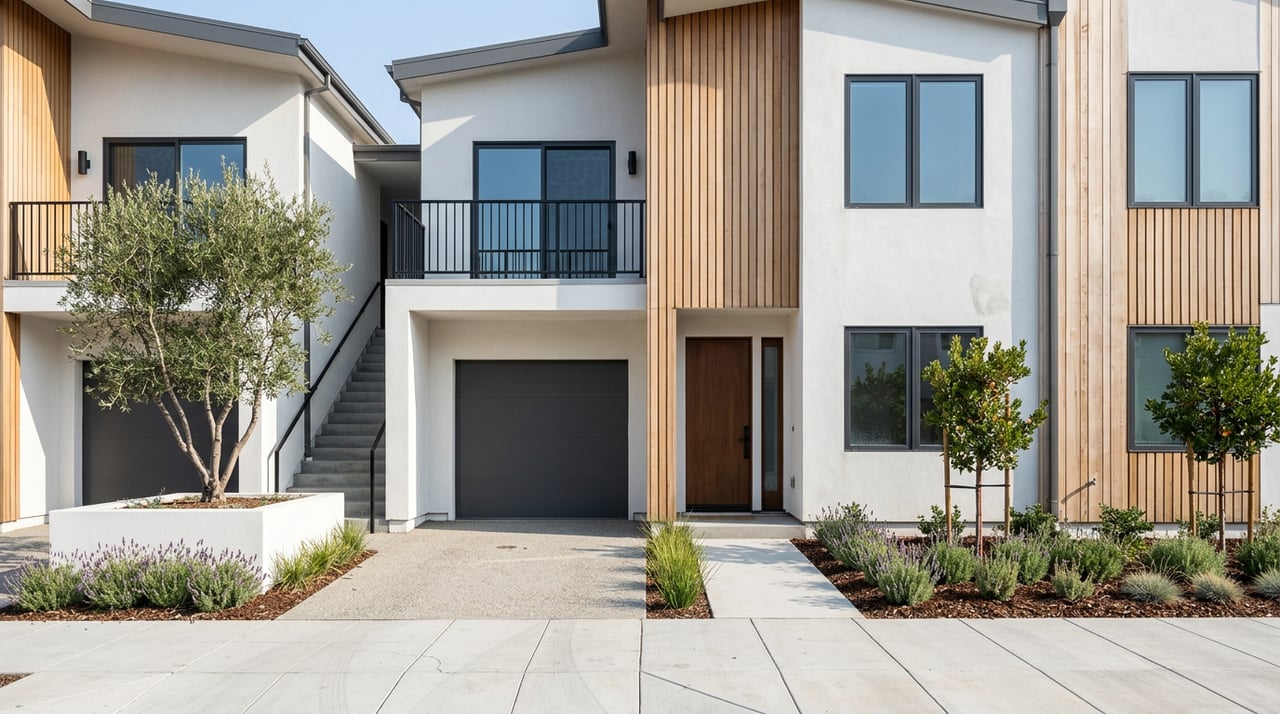
Thinking about trading yard work for a low‑maintenance home on the Peninsula? If you are weighing a townhome against a condo in San Mateo County, you are not alone. Both options can offer a great lifestyle near jobs, transit, and the Bay, but the details matter. In this guide, you will learn how each option works, what you can expect to pay in dues, how financing differs, and how to vet an HOA before you buy. Let’s dive in.
Condo vs. townhome: what they mean here
How condos work in California
A condominium is an ownership structure governed by California’s Davis–Stirling Common Interest Development Act. You own the interior of your unit plus a shared interest in the common areas, and the community’s CC&Rs and HOA rules outline responsibilities. You can read the statute summary in the Civil Code for context at the state’s site on the Davis–Stirling Act.
- Learn more about the legal framework in the Davis–Stirling Act on the California Civil Code website: California Civil Code Sections 4000–6150
What “townhome” really means
“Townhome” describes a multi‑level attached home style, not a single legal structure. In San Mateo County, a townhome community might be recorded as a condo project, a planned unit development (PUD), or even fee‑simple lots with some shared elements. The legal form affects your HOA rules and financing options. Always verify how the project was recorded in the documents.
- See an overview of how associations and compliance work under Davis–Stirling: California HOA guide and compliance notes
Key takeaway
“Condo” is a legal ownership type with HOA rules under Davis–Stirling. “Townhome” is a building style that can be structured legally in different ways. The recorded documents tell you which rules and lender requirements apply.
Prices and unit types to expect
Countywide, housing is premium priced. All-home medians often sit in the mid‑to‑high $1M range. Condos and townhomes trade lower than single‑family homes but remain high compared with most U.S. markets. As of 2025 sample data, a 2‑bed/2‑bath condo often trades around 860K–870K with a median size near 1,180 square feet, while a typical 3‑bed townhome often lands around 1.4M–1.5M and 1,600+ square feet. These are county‑level ballparks and vary by city and by month.
- For a snapshot of recent Peninsula condo/townhome medians and sizes, see this regional report: Peninsula market report sample
City differences to keep in mind
- San Mateo: Mix of mid‑rise condos and newer townhome projects in walkable areas like downtown or planned districts. Expect lifestyle convenience near shops and services.
- Redwood City: Strong demand near downtown and in Redwood Shores, which sits near large employers. Oracle’s history in Redwood Shores contributes to local job center gravity. See context on Oracle’s local footprint: Oracle overview.
- South San Francisco: A major biotech hub with a mix of older garden‑style complexes and newer infill buildings. Genentech anchors a large biotech cluster: Genentech visitor information.
HOA dues: what they cover and what to check
What dues usually include
Monthly HOA dues typically cover common‑area upkeep, landscaping, exterior maintenance, master/building insurance, management fees, and utilities for common areas. Communities with pools, elevators, gyms, or staffed lobbies tend to have higher dues. Always verify the line items in the annual budget and financials.
Typical ranges in San Mateo County
Dues vary widely by age, size, and amenities. Recent samples across the county show a broad range, roughly 300 dollars per month on the low end up to 1,000 dollars or more in larger or amenity‑rich complexes. Treat these as typical ranges, not rules. Individual buildings can fall outside this band.
Insurance and earthquake exposure
Your HOA’s master policy usually covers common areas and the building shell to some degree. You will likely need an HO‑6 policy to insure interior finishes, personal property, liability, and loss‑assessment coverage. Many associations in California do not carry master earthquake insurance because of cost. If earthquake coverage is missing, owners can face large assessments after a quake. Review the insurance declarations closely and discuss options with your insurer.
- Understand what HOA master policies do and what an HO‑6 covers: Condo association insurance basics
Parking, outdoor space, and amenities
Parking and storage
Townhomes are more likely to include a private attached garage and better storage. Condos often rely on assigned or deeded garage stalls plus shared storage rooms. Confirm whether parking is deeded or assigned, the number of spaces, EV charging rules, and guest parking policies.
Private outdoor space
Townhomes commonly offer a patio, small yard, or roof deck. Condos more often provide balconies and shared courtyards. If you want more private outdoor space, focus on townhomes or low‑rise condo buildings with larger terraces.
Amenities and lifestyle tradeoffs
Condo buildings often deliver bigger shared amenity packages such as pools, gyms, and courtyards, which can justify higher dues and create a lock‑and‑leave lifestyle. Townhomes typically trade big shared amenities for private garages and a home‑like layout.
Commute and transit on the Peninsula
Caltrain is the backbone for Peninsula commuters, with San Mateo County stations that include South San Francisco, San Bruno, Millbrae, Burlingame, San Mateo, Hillsdale, and Redwood City. Electrification and service improvements since 2024–2025 have increased frequency and shortened some run times. If you prioritize rail access, evaluate walking distance and first‑mile connections. SamTrans buses help fill gaps where rail is not nearby.
- Check current schedules and stations: Caltrain service and timetables
Proximity to major employers can also tilt your decision. If you work in South San Francisco’s biotech cluster or near Redwood Shores, living close to shuttles or rail can reduce commute stress and parking costs.
Financing essentials for condos and townhomes
Warrantable vs. non‑warrantable projects
For condos, lenders and investors like Fannie Mae and Freddie Mac apply project‑level rules that affect loan eligibility. Factors include owner‑occupancy ratios, reserve funding, dues delinquencies, litigation, and insurance coverage. Projects that do not meet guidelines can be labeled “non‑warrantable,” which can limit loan choices and raise rates or down payment needs. Verify a project’s status early with your lender.
- Learn what lenders look for in condo projects: Condo warrantability requirements
FHA, VA, and approvals
FHA and VA financing also require project approvals for many condos. If you plan to use these programs, confirm whether the project is approved or can be reviewed before you get too far. If a condo is not approved, your lender can discuss alternatives or different products.
- Search guidance for approved condos and process notes: FHA and HUD condo approval overview
Townhomes that are legally condo projects can face the same rules. Townhomes recorded as PUDs or fee‑simple lots may be simpler to finance, but always confirm the legal form.
Your buyer due‑diligence checklist
Use this list to protect your investment and avoid surprises. Your agent can help you gather and interpret these items.
- Association budget, recent financials, and the latest reserve study. Look for adequate reserves and realistic funding plans. See association compliance considerations: HOA compliance and disclosures
- Insurance declarations for the master policy. Confirm coverage type, limits, and whether earthquake insurance is carried. If not, ask about loss‑assessment options on your HO‑6. Reference basics here: Condo association insurance basics
- CC&Rs, bylaws, and current rules (pets, rentals, parking, EV charging). Rules affect lifestyle and resale.
- Board meeting minutes and recent notices. Watch for litigation, deferred maintenance, or pending special assessments. See HOA transparency requirements overview: HOA compliance and disclosures
- HOA questionnaire or confirmation of FHA/Fannie/Freddie/VA status if you plan to use those loans. Start early. Learn the basics: Condo warrantability requirements and FHA/HUD condo approval overview
- Parking and storage specifics. Confirm deeded vs. assigned spaces, storage location, guest rules, and any EV charging fees or waitlists.
- Document access and owner rights under Davis–Stirling. California law provides record access and other protections. See the legal framework: California Civil Code Sections 4000–6150
Which lifestyle fits you?
Consider how you will live day to day.
- Pick a condo if you want a lock‑and‑leave building with shared amenities, walkability, and less hands‑on maintenance. Many buyers close to Caltrain or major job centers value this setup.
- Choose a townhome if you want a layout that feels more like a single‑family home, often with a private garage, more storage, and larger private outdoor space.
- Focus your search near your commute path. If you rely on Caltrain, look at buildings close to stations. If you drive to campuses in South San Francisco or Redwood Shores, prioritize quick freeway access or shuttle hubs.
How we help you choose with confidence
You deserve clear, honest guidance. I help you compare buildings and HOAs, read budgets and reserve studies, confirm insurance details, and coordinate with lenders on warrantability, FHA, or VA considerations. You will understand the tradeoffs on dues, amenities, parking, and commute before you write an offer.
Ready to explore condos and townhomes that match your lifestyle and budget in San Mateo County? Schedule a free consultation with Cj Salazar Real Estate.
FAQs
What is the key difference between a condo and a townhome in San Mateo County?
- A condo is a legal ownership type under the Davis–Stirling Act, while “townhome” describes the building style; a townhome community can be legally a condo, a PUD, or fee‑simple, which affects HOA rules and financing.
How much are typical HOA dues for condos and townhomes locally?
- Dues often range from about 300 dollars per month on the low end to 1,000 dollars or more in larger or amenity‑rich complexes; always verify what dues include and the association’s reserves.
Do local HOAs usually include earthquake insurance on the master policy?
- Many California associations do not carry master earthquake coverage due to cost; owners can face large assessments after a quake, so review the insurance declarations and consider loss‑assessment coverage on your HO‑6.
What makes a condo project non‑warrantable, and why does it matter?
- Factors like low reserves, high dues delinquencies, litigation, or insurance gaps can make a project fail Fannie/Freddie tests; non‑warrantable status can limit loan options and increase costs.
Can I use FHA or VA financing to buy a condo here?
- Yes, but many condos require project approval for FHA or VA loans; confirm approval status early or discuss alternatives with your lender.
How do parking and storage usually work in condos versus townhomes?
- Townhomes often have private attached garages and better storage; condos commonly have assigned or deeded garage spaces and shared storage rooms. Always confirm whether parking is deeded or assigned.
What transit options should I consider when choosing a building?
- Caltrain is the Peninsula’s main rail spine, with stations across San Mateo County and improved service after electrification; check current timetables and walking distances to stations for realistic commute planning.